The JointAction Platform
The intelligence layer behind serious WMSD prevention.
The JointAction Platform turns objective assessment evidence into operational work-related musculoskeletal disorder (WMSD) prevention intelligence — task insights, the task demands library, return-to-work matching, the risk universe, validation evidence, longitudinal reporting and the Project Jai AI workflows. The strength is the layer as a coherent whole.
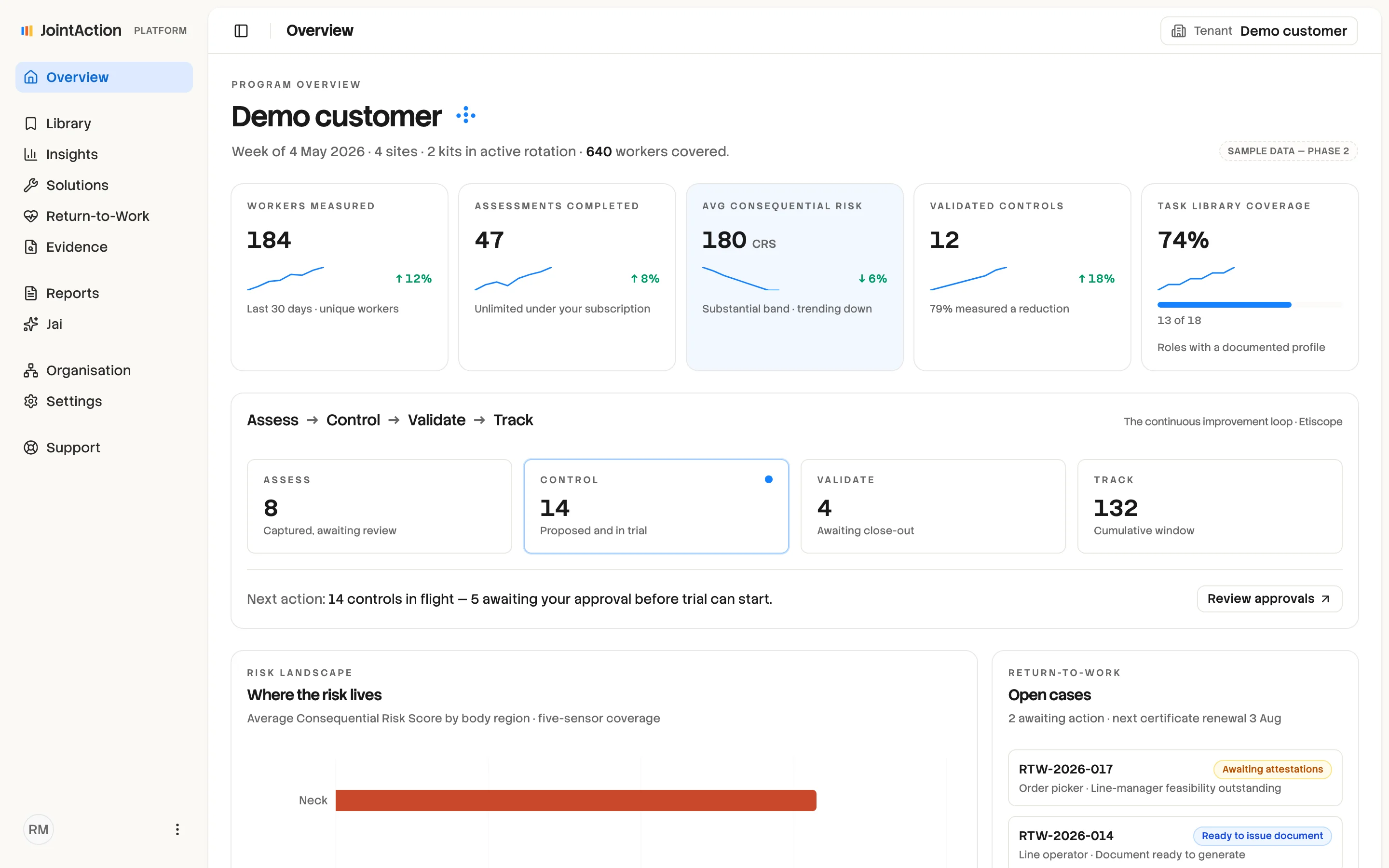
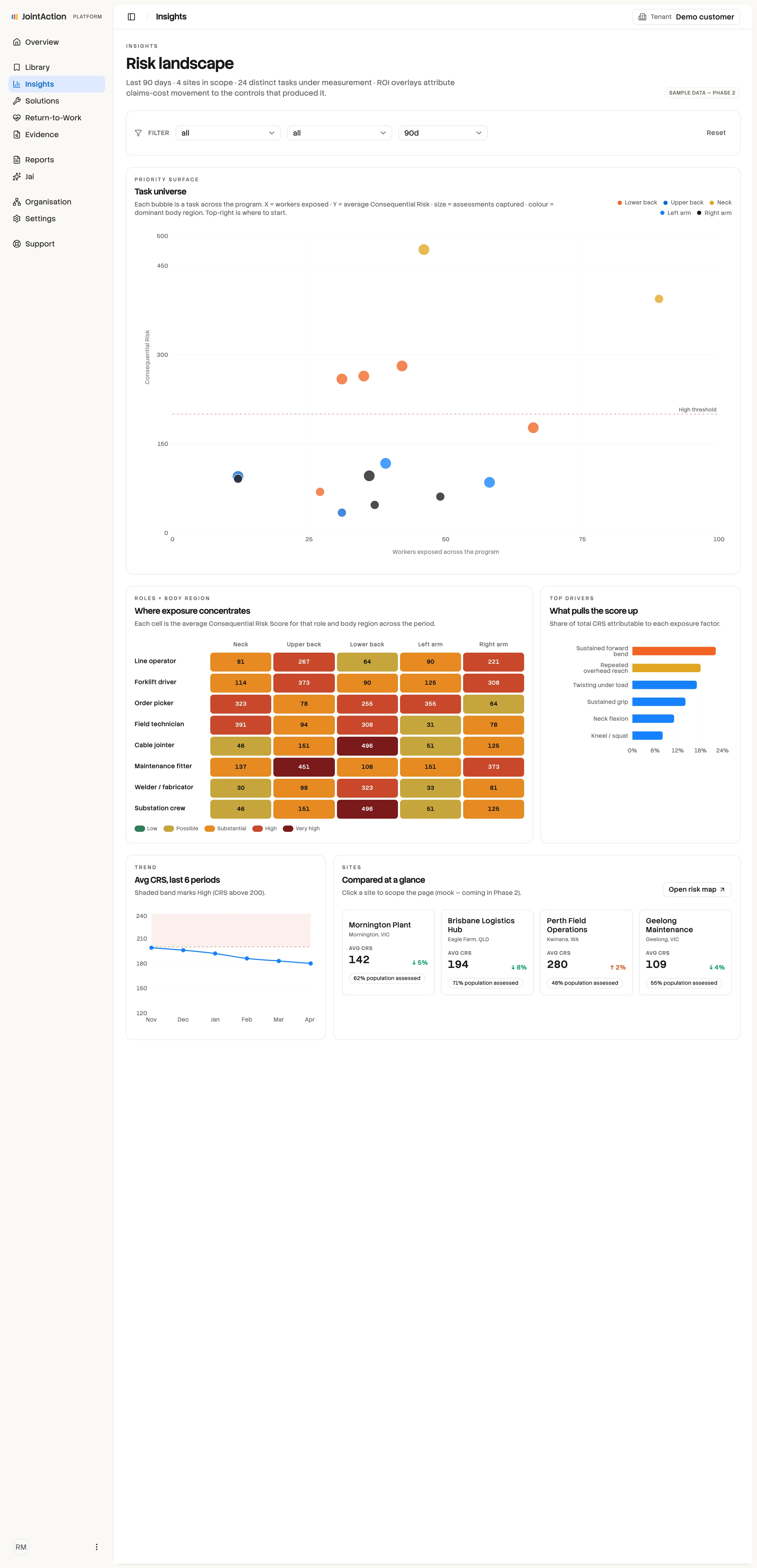
The risk universe and the program overview · illustrative sample data. Click to expand.
The heart of the platform
Evidence, process, intelligence.
Evidence
Objective, sensor-derived data captured in the actual workplace, in the actual conditions. Etiscope is how the customer captures it — around 10 minutes per assessment.
Process
The disciplined Assess → Control → Validate → Track methodology, the Consequential Risk Score, and alignment with REBA, RULA, MAC, ISO 31000 and Safe Work Australia guidance.
Intelligence
The layer that turns evidence-and-process into operational outcomes — task insights, the library, return-to-work matching, the risk universe, validation and longitudinal reporting.
What the platform produces
One layer, many outputs — no single one is the headline.
The platform expresses itself across many forms. Treat them as a coherent set: the value is in connecting the whole picture, not any single output.
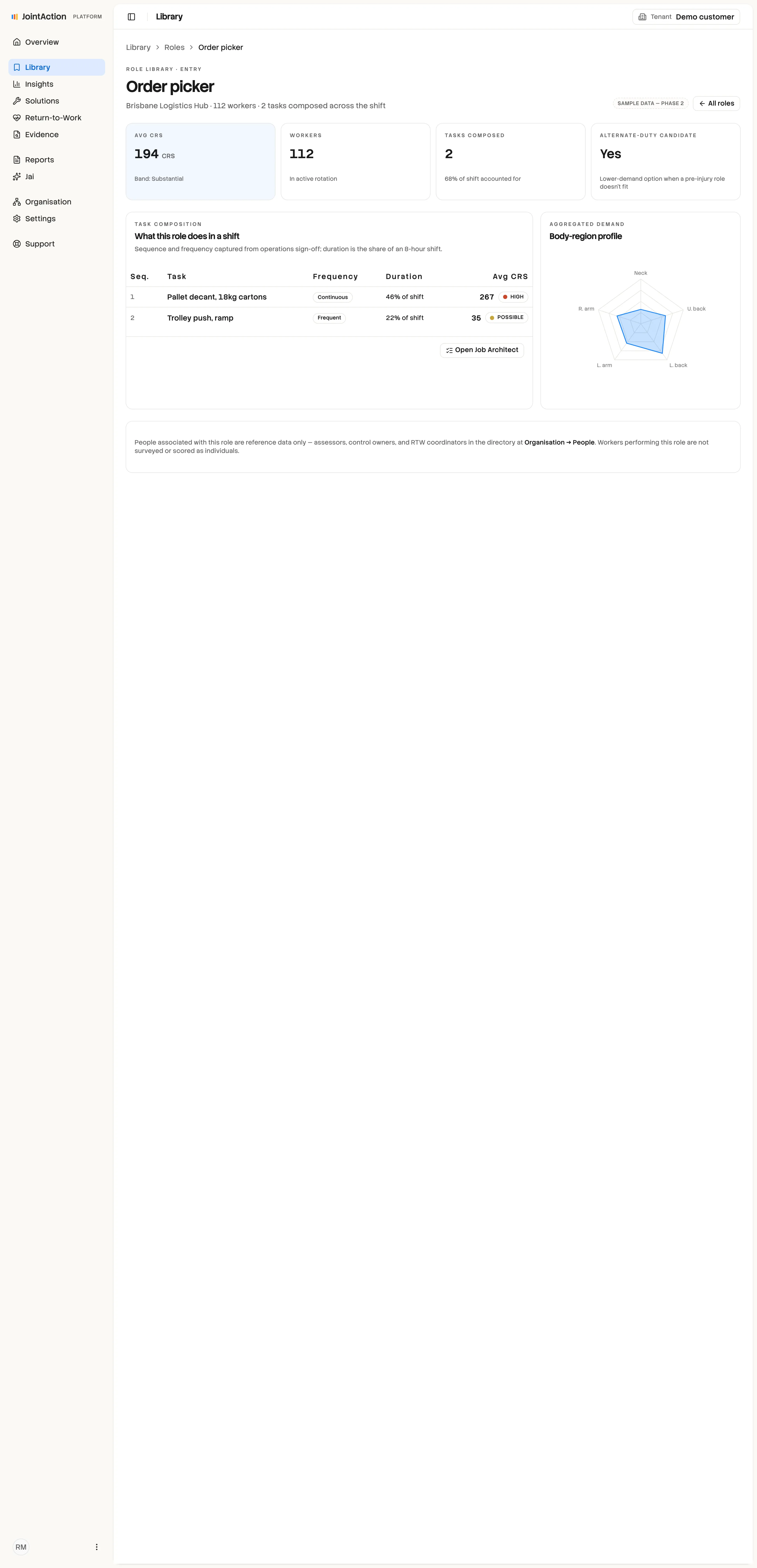
Task demands library
A documented profile of the physical demands of every important role in the organisation.
Return-to-work matching
Certificate restrictions judged against per-task demands — an evidence-backed suitable-duties document for the treating doctor, not ambiguous “modified duties.” The RTW Matchmaker module is in development; return-to-work matching against documented role demands is delivered today as an engagement on top of your task demands library.
The risk universe
Portfolio-level visualisation of risk across every site, shift and role.
Validation evidence
Pre and post scoring of the same task, same protocol, side by side.
Task & job insights
What the data implies about specific tasks and aggregated roles.
Procurement evaluation
Pre-purchase testing of equipment, vehicles and tools against existing demand profiles.
Safe-design input
Layout, workflow and engineering-control decisions informed by exposure data.
Longitudinal reporting
Time-series evidence of risk distribution and control effectiveness.
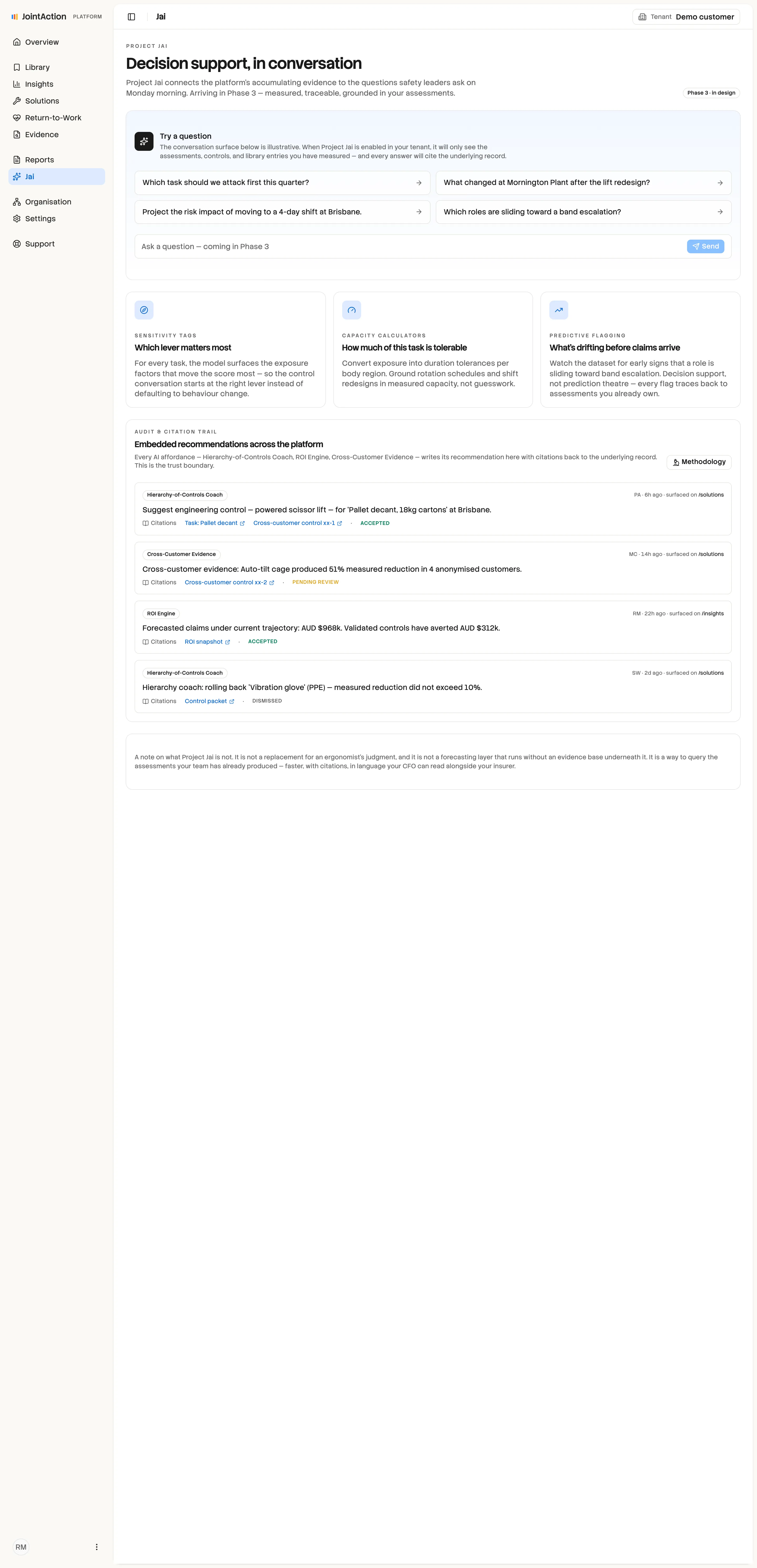
Project Jai
Natural-language reporting, decision support and exposure forecasting, from Project Jai.
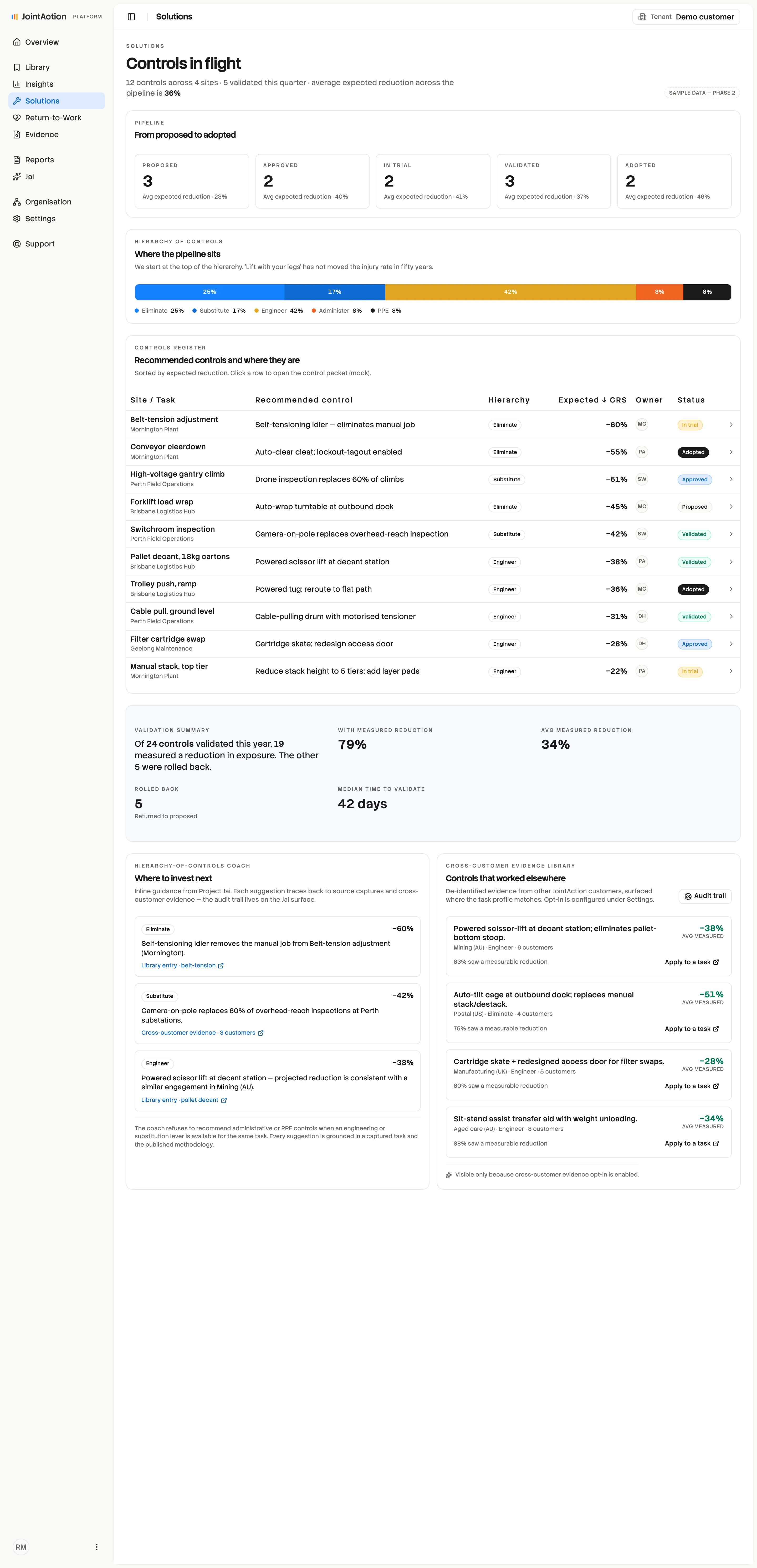
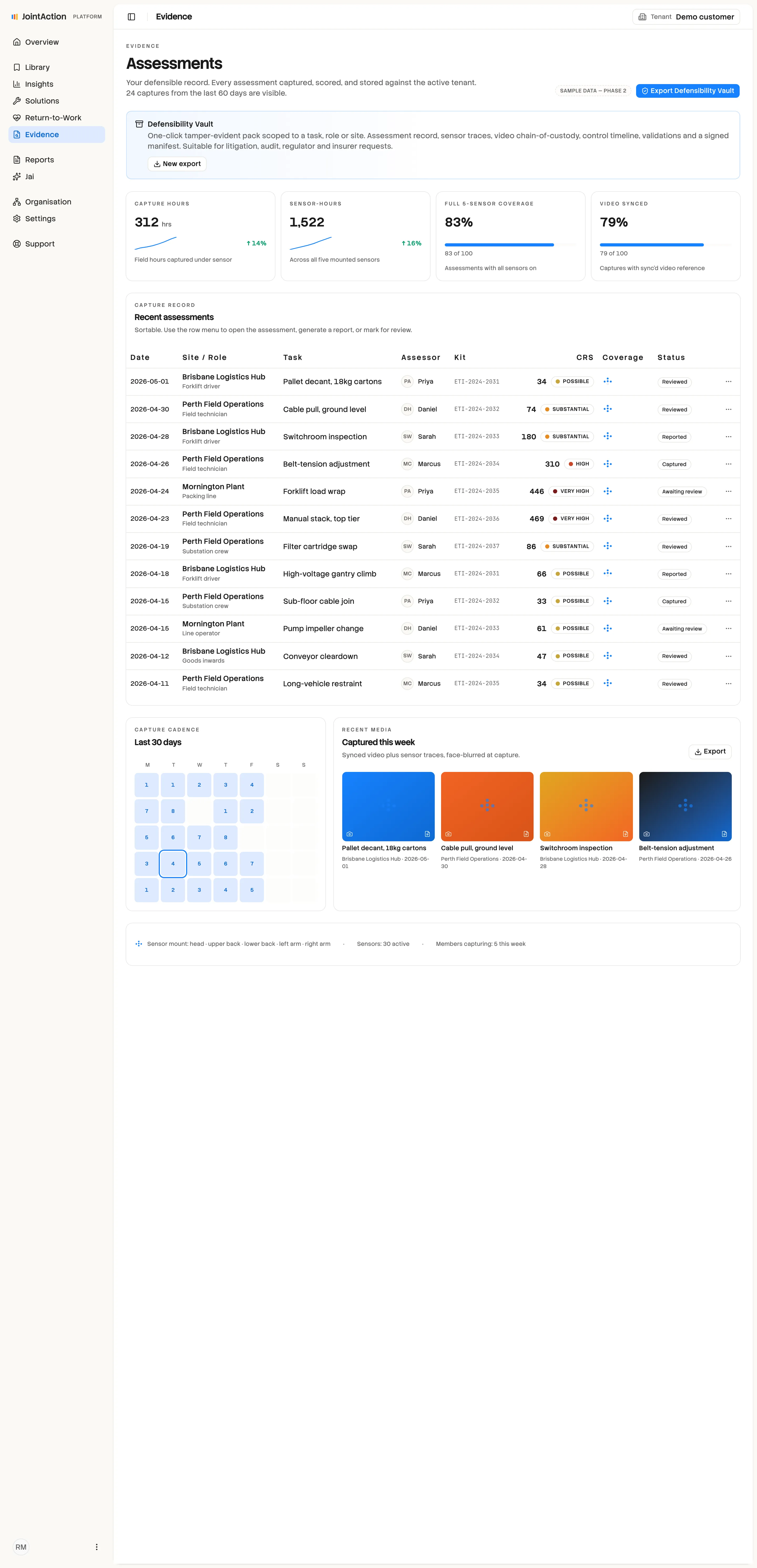

Why a connected approach
A multi-factorial risk needs a connected answer.
MSD risk is multi-factorial: it emerges from how load, posture, repetition, duration and force combine and accumulate — against the worker’s recovery, the environment and PPE, and how the work is organised. A program that chases a single factor leaves the rest compounding. The platform connects the whole prevention lifecycle — assess, control, validate, track, return-to-work matching, role demands, the longitudinal record — rather than handing over one number.

The compounding pay-off
The asset deepens the longer your program runs.
A single assessment is useful. A library across the whole organisation is the evidence base for an entire prevention and injury-management system. The platform builds a coherent intelligence layer you own — and the longer your program runs, the deeper it gets.
Architecture
Platform, products and capability — how they relate.
JointAction Platform
The solutions & intelligence layer — where evidence becomes program intelligence
Etiscope
Captures the physical-work evidence the platform runs on
MoveTime
A parallel path for sedentary and desk-based workers
Project Jai
The AI capability inside the platform